



• About Us
  • Get Insights to Your Inbox
Tuesday, August 25, 2026
Generic selectors
Exact matches only
Search in title
Search in content
Post Type Selectors
Search in posts
Search in Author
Search Events
Filter by Categories
Action Learning
Artificial Intelligence in Business
Book Club
Books
BU Today
Business Challenges
Business Education
Business Functions
Business Policy & Markets
Corporate Strategy
Digital Business
Digital Business Institute
Diversity, Equity & Inclusion
Entrepreneurship & Innovation
Events
Expert Take
Feature
Finance & Accounting
Future of Business Education
Future of Work
Global Media
Harvard Business Review
Health, Biopharma, & Health-Tech
Human Resources Policy Institute
Innovation
Insights Live
Institute for Sustainable Energy
Journals
Language of Business
Leadership & Management
Local Media
Marketing
Media Mention
Multimedia
National Media
Newsletter Spotlight
Op-Ed
Operations
Opinion
Our Insights
Partners in Business Ethics
Podcast
Publications
Research Institutes
Risk
ScienceDirect
Silicon Valley Bank
Sloan Management Review
Social Impact
Special Series
Susilo Institute for Ethics in the Global Economy
Technology
The Brink
Thinkers50@BUQuestrom: Passion & Purpose
Videos
Insights@Questrom
  • Our Insights
    • All
    • Business Challenges
    • Business Education
    • Business Functions
    When Is More Information Actually Helpful? Rethinking Disclosure and Consumer Behavior  

    When Is More Information Actually Helpful? Rethinking Disclosure and Consumer Behavior  

    Personal bankruptcy filings are soaring in 2026, signaling growing economic distress

    Personal bankruptcy filings are soaring in 2026, signaling growing economic distress

    Shareholders Are People, Too

    An Early Bet on SpaceX Led to a 30% Gain for This College Endowment

    A Risk Management Nightmare at Silicon Valley Bank

    Your AI agent can be a teammate. But it still needs a boss 

    Bank fail: How Rising Interest Rates Paved the Way for Silicon Valley Bank’s Collapse

    FDA weighs a new kind of flu shot based on technology RFK Jr. has questioned

    Best Personal Loans for a 600 Credit Score

    Bank of America® Travel Rewards credit card

    Newbury Street’s Sneaker Problem: Too Many Good Options? 

    Newbury Street’s Sneaker Problem: Too Many Good Options? 

    The Hidden Risk of Getting Paid in Stock Options 

    Is It OK to Eat the Same Things Every Day? 

  • Videos & Podcast
    • All
    • Podcast
    • Videos
    S1:E1 CVS Paying the “Pink Tax” on Certain Products and the Evolution of the Electric Vehicle Industry

    How Leaders Turn Purpose Into Daily Behaviors

    Beyond Clicks and Sales: How Advertising Shapes Company Value in the Eyes of Investors

    S1:E1 CVS Paying the “Pink Tax” on Certain Products and the Evolution of the Electric Vehicle Industry

    Tariffs and Their Economic Impact

    S1:E1 CVS Paying the “Pink Tax” on Certain Products and the Evolution of the Electric Vehicle Industry

    Navigating Internet Privacy: Unpacking Cookies, Dark Patterns, and Future Data Protection Challenges (2)

    Beyond Prototypes: Rethinking Innovation in Complex Ecosystems with Prof. Douglas Hannah

    Beyond Prototypes: Rethinking Innovation in Complex Ecosystems with Prof. Douglas Hannah

    Is Business Broken? Season 2 out now! 

    Is Business Broken? Season 2 out now! 

    S1:E1 CVS Paying the “Pink Tax” on Certain Products and the Evolution of the Electric Vehicle Industry

    Redefining Retirement: Navigating Emotional and Social Transitions with Insightful Strategies

    Life After Cookies: Who Uses Google’s Privacy Sandbox? – Garrett Johnson

    Life After Cookies: Who Uses Google’s Privacy Sandbox? – Garrett Johnson

    S1:E1 CVS Paying the “Pink Tax” on Certain Products and the Evolution of the Electric Vehicle Industry

    Real Estate Ripples from a Landmark Settlement

  • Insights Events
    • Events
    • Insights Live
    • Questrom Institute Events
  • In the Media
    • All
    • BU Today
    • Global Media
    • Local Media
    • National Media
    • Op-Ed
    • The Brink
    Shareholders Are People, Too

    An Early Bet on SpaceX Led to a 30% Gain for This College Endowment

    A Risk Management Nightmare at Silicon Valley Bank

    Your AI agent can be a teammate. But it still needs a boss 

    Bank fail: How Rising Interest Rates Paved the Way for Silicon Valley Bank’s Collapse

    FDA weighs a new kind of flu shot based on technology RFK Jr. has questioned

    Best Personal Loans for a 600 Credit Score

    Bank of America® Travel Rewards credit card

    Newbury Street’s Sneaker Problem: Too Many Good Options? 

    Newbury Street’s Sneaker Problem: Too Many Good Options? 

    The Hidden Risk of Getting Paid in Stock Options 

    Is It OK to Eat the Same Things Every Day? 

    The New Layoff Playbook? Why Google and Microsoft Are Betting on Voluntary Exits  

    The New Layoff Playbook? Why Google and Microsoft Are Betting on Voluntary Exits  

    Push to roll back electric vehicle subsidies brings uncertainty for automakers 

    Should paper checks go the way of the penny? Americans still writing billions of them 

    Competitiveness and migration reports agree to disagree 

    Health Insurance Woes Reaching ‘Inflection Point,’ Commissioner Says

  • Publications
    • All
    • Books
    • Harvard Business Review
    • Journals
    • Sloan Management Review
    How Retailers Can Capitalize on the “Refund Effect”

    Frontline Workers Know How to Solve Your Organization’s Biggest Problems 

    How Retailers Can Capitalize on the “Refund Effect”

    Research: When Consumers Have More Control Over Ads, They Respond Better 

    How Retailers Can Capitalize on the “Refund Effect”

    Gen AI Could Fix Performance Reviews—or Make Them Even Worse 

    How Retailers Can Capitalize on the “Refund Effect”

    What Global Companies Lose When Decision-Making Revolves Around Headquarters 

    How Retailers Can Capitalize on the “Refund Effect”

    Research: Why You Shouldn’t Treat AI Agents Like Employees 

    How Retailers Can Capitalize on the “Refund Effect”

    Employees Are Relying on AI for Personal Support. That’s Risky. 

    How Retailers Can Capitalize on the “Refund Effect”

    Why Gen AI Feels So Threatening to Workers 

    How Retailers Can Capitalize on the “Refund Effect”

    Is Your Enterprise Data Strategy Ready for the Age of Intelligence? 

    How Retailers Can Capitalize on the “Refund Effect”

    Could the GPT Store Turn ChatGPT into a Platform Powerhouse? 

  • Questrom Book Club
Insights@Questrom
  • Our Insights
    • All
    • Business Challenges
    • Business Education
    • Business Functions
    When Is More Information Actually Helpful? Rethinking Disclosure and Consumer Behavior  

    When Is More Information Actually Helpful? Rethinking Disclosure and Consumer Behavior  

    Personal bankruptcy filings are soaring in 2026, signaling growing economic distress

    Personal bankruptcy filings are soaring in 2026, signaling growing economic distress

    Shareholders Are People, Too

    An Early Bet on SpaceX Led to a 30% Gain for This College Endowment

    A Risk Management Nightmare at Silicon Valley Bank

    Your AI agent can be a teammate. But it still needs a boss 

    Bank fail: How Rising Interest Rates Paved the Way for Silicon Valley Bank’s Collapse

    FDA weighs a new kind of flu shot based on technology RFK Jr. has questioned

    Best Personal Loans for a 600 Credit Score

    Bank of America® Travel Rewards credit card

    Newbury Street’s Sneaker Problem: Too Many Good Options? 

    Newbury Street’s Sneaker Problem: Too Many Good Options? 

    The Hidden Risk of Getting Paid in Stock Options 

    Is It OK to Eat the Same Things Every Day? 

  • Videos & Podcast
    • All
    • Podcast
    • Videos
    S1:E1 CVS Paying the “Pink Tax” on Certain Products and the Evolution of the Electric Vehicle Industry

    How Leaders Turn Purpose Into Daily Behaviors

    Beyond Clicks and Sales: How Advertising Shapes Company Value in the Eyes of Investors

    S1:E1 CVS Paying the “Pink Tax” on Certain Products and the Evolution of the Electric Vehicle Industry

    Tariffs and Their Economic Impact

    S1:E1 CVS Paying the “Pink Tax” on Certain Products and the Evolution of the Electric Vehicle Industry

    Navigating Internet Privacy: Unpacking Cookies, Dark Patterns, and Future Data Protection Challenges (2)

    Beyond Prototypes: Rethinking Innovation in Complex Ecosystems with Prof. Douglas Hannah

    Beyond Prototypes: Rethinking Innovation in Complex Ecosystems with Prof. Douglas Hannah

    Is Business Broken? Season 2 out now! 

    Is Business Broken? Season 2 out now! 

    S1:E1 CVS Paying the “Pink Tax” on Certain Products and the Evolution of the Electric Vehicle Industry

    Redefining Retirement: Navigating Emotional and Social Transitions with Insightful Strategies

    Life After Cookies: Who Uses Google’s Privacy Sandbox? – Garrett Johnson

    Life After Cookies: Who Uses Google’s Privacy Sandbox? – Garrett Johnson

    S1:E1 CVS Paying the “Pink Tax” on Certain Products and the Evolution of the Electric Vehicle Industry

    Real Estate Ripples from a Landmark Settlement

  • Insights Events
    • Events
    • Insights Live
    • Questrom Institute Events
  • In the Media
    • All
    • BU Today
    • Global Media
    • Local Media
    • National Media
    • Op-Ed
    • The Brink
    Shareholders Are People, Too

    An Early Bet on SpaceX Led to a 30% Gain for This College Endowment

    A Risk Management Nightmare at Silicon Valley Bank

    Your AI agent can be a teammate. But it still needs a boss 

    Bank fail: How Rising Interest Rates Paved the Way for Silicon Valley Bank’s Collapse

    FDA weighs a new kind of flu shot based on technology RFK Jr. has questioned

    Best Personal Loans for a 600 Credit Score

    Bank of America® Travel Rewards credit card

    Newbury Street’s Sneaker Problem: Too Many Good Options? 

    Newbury Street’s Sneaker Problem: Too Many Good Options? 

    The Hidden Risk of Getting Paid in Stock Options 

    Is It OK to Eat the Same Things Every Day? 

    The New Layoff Playbook? Why Google and Microsoft Are Betting on Voluntary Exits  

    The New Layoff Playbook? Why Google and Microsoft Are Betting on Voluntary Exits  

    Push to roll back electric vehicle subsidies brings uncertainty for automakers 

    Should paper checks go the way of the penny? Americans still writing billions of them 

    Competitiveness and migration reports agree to disagree 

    Health Insurance Woes Reaching ‘Inflection Point,’ Commissioner Says

  • Publications
    • All
    • Books
    • Harvard Business Review
    • Journals
    • Sloan Management Review
    How Retailers Can Capitalize on the “Refund Effect”

    Frontline Workers Know How to Solve Your Organization’s Biggest Problems 

    How Retailers Can Capitalize on the “Refund Effect”

    Research: When Consumers Have More Control Over Ads, They Respond Better 

    How Retailers Can Capitalize on the “Refund Effect”

    Gen AI Could Fix Performance Reviews—or Make Them Even Worse 

    How Retailers Can Capitalize on the “Refund Effect”

    What Global Companies Lose When Decision-Making Revolves Around Headquarters 

    How Retailers Can Capitalize on the “Refund Effect”

    Research: Why You Shouldn’t Treat AI Agents Like Employees 

    How Retailers Can Capitalize on the “Refund Effect”

    Employees Are Relying on AI for Personal Support. That’s Risky. 

    How Retailers Can Capitalize on the “Refund Effect”

    Why Gen AI Feels So Threatening to Workers 

    How Retailers Can Capitalize on the “Refund Effect”

    Is Your Enterprise Data Strategy Ready for the Age of Intelligence? 

    How Retailers Can Capitalize on the “Refund Effect”

    Could the GPT Store Turn ChatGPT into a Platform Powerhouse? 

  • Questrom Book Club
Insights@Questrom
Home Our Insights Business Challenges Business Policy & Markets

Americans spend millions of dollars on Valentine’s Day roses. I calculated exactly how much

Jay ZagorskyfeaturingJay Zagorsky
February 8, 2024 - Updated On February 22, 2024
in Business Policy & Markets, National Media
69
0
Americans spend millions of dollars on Valentine’s Day roses. I calculated exactly how much
Share on FacebookShare on TwitterShare on LinkedIn

Feb. 14 is Valentine’s Day – an occasion that traditionally combines romance with big business. One of the biggest businesses is selling roses, which Americans increasingly love. Back in 1989, about 1 billion cut roses were sold annually in the U.S. By 2023, that had risen to roughly 2.8 billion – enough to give every adult in the country a bouquet of 10.

As a business school professor who studies the economic impact of holidays, I wondered how much money Americans spend on roses each year while I was standing in line with two dozen red and pink ones for my sweetheart.

It’s not easy to find out. The National Retail Federation estimates people will spend US$2.6 billion on Valentine’s Day flowers, but that includes everything from azaleas to zinnias. The Society of American Florists says that 250 million roses are produced for the holiday, but it doesn’t estimate spending.

So I decided to investigate. And what I found was surprising: The roses in my hand were tied to the war on illegal drugs.

Where are those roses coming from?

Roses sold in the U.S. were once largely homegrown but are now mainly imported from South America. To learn more, I turned to the U.S. Department of Agriculture, which for decades has tracked the number of domestic farms and nurseries selling cut roses. These farms are different from nurseries growing rose bushes sold in pots to landscapers and gardeners.

Back in 1970, there were almost 800 U.S. commercial farms and nurseries growing cut roses. U.S. cut-rose growers were powerhouses, selling almost half a billion roses annually.

But since the 1970s, American cut-rose growers have withered away. The USDA’s latest Census of Horticultural Specialties found about 110 farms and nurseries growing cut roses. These farms harvested only about 18 million roses, which is quite a comedown over 50 years.

So where are roses coming from now? In 2023, the U.S. imported about 2.8 billion cut roses. The Netherlands, site of the world’s largest flower auction, isn’t the answer. Instead, cut roses sold in the U.S. primarily come from two places: Colombia and Ecuador. Colombia provides almost 60% of our roses, and Ecuador almost 40%.
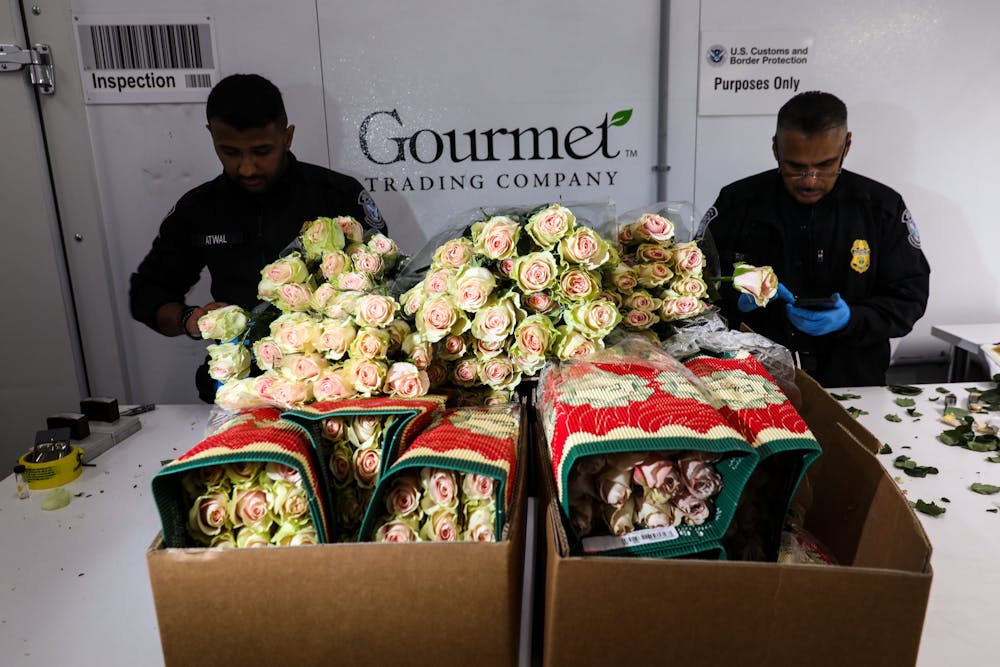
Two security agents dressed in black inspect cardboard boxes filled with white and yellow flowers.
U.S. Customs and Border Protection agriculture specialists inspect imported roses ahead of Mother’s Day in May 2023. Jay L. Clendenin/Los Angeles Times/Getty Images

Why Colombia and Ecuador?

The shift from U.S.-grown roses to South American ones happened a few decades ago, when the U.S. and Colombian governments were looking for new ways to stem the flow of cocaine into the U.S.

One part of the strategy was to convince farmers in Colombia to stop growing coca leaves – a traditional Andean plant that provides the raw ingredient for making cocaine – by giving them preferential access to U.S. markets if they grew something else.

So, in the early 1990s, Colombia and Ecuador signed the Andean Trade Promotion and Drug Eradication Act. Signing gave these coca-producing countries duty-free access to U.S. markets in exchange for clamping down on growing illegal drugs.

Whether the act stopped drug production is unclear, but many businesses in Colombia and Ecuador started growing and shipping flowers north.

Prices for roses

The vast quantity of roses coming up from Colombia and Ecuador has kept rose prices in check. The USDA has tracked the price of a dozen red hybrid tea roses – the ones you commonly see being offered to romantic partners on Valentine’s Day – sold in major supermarkets weekly since 2011. Back in 2011, a dozen roses would set a buyer back a bit over $10. In 2023, the same arrangement cost around two dollars more, a price increase of 20%. Inflation went up 35% over the same time, making roses comparatively cheaper.

While rose prices are low during much of the year, they have large seasonal swings. In a typical year, supermarket prices for a dozen roses double around Valentine’s Day. Last year, prices ranged from a low in August of about $8 to almost $23 before Valentine’s Day. While the USDA doesn’t track flower shop prices, visiting my local florist shows the cost of premium long-stem roses in vases is higher.

Why the price increase?

Prices rise around Valentine’s Day as all parts of the supply chain, from growers to wholesalers to retailers, are stressed during the buying surge.

The U.S. government tracks monthly the import price of single roses. In 2023, before Valentine’s Day, the average cut rose stem cost 40 cents coming off the cargo plane. This is higher than the annual low in August of 25 cents a stem. This means in August, roses cost wholesalers $3 a dozen, while a dozen Valentine’s Day roses cost $5 after clearing customs.

The USDA not only tracks prices in supermarkets but also wholesale flower prices in my city, Boston. Retail customers can’t buy flowers at these prices, since the flower market caters only to people in the trade. Just before Valentine’s Day 2024, Boston wholesalers were charging between $1 and $1.65 per stem of hybrid tea roses. Back in August 2023, they were selling roses for between 90 cents and $1.50 per stem. These wholesale prices suggest supermarkets don’t make much if any money selling roses most of the year, earning profits only during the peak holiday times.

While none of the sources directly answered my question on how much money Americans spent on roses each year, it’s easy to calculate a rough value. In 2023, there were around 2.8 billion cut roses sold. Given the average price in supermarkets over the whole year for a dozen roses was a bit over $12, this means people in the U.S. are spending more than $3 billion annually.

And if you’re buying roses for your sweetheart, like I did for mine, then you’re contributing to the roughly half a billion dollars worth of roses bought to say “I love you” at Valentine’s Day.

This article is republished from The Conversation under a Creative Commons license. Read the original article.


Tags: consumer behaviorJay ZagorskyThe ConversationValentine's Day
Jay Zagorsky

Jay Zagorsky

Jay Zagorsky is Clinical Associate Professor in Markets, Public Policy, & Law and is a cross-disciplinary researcher who has spent over two decades of researching a wide variety of personal wealth topics. He tries to explain why some people become rich, others are poor and some move between these two states. He is currently synthesizing this research into a book that presents the results of his academic research and other wealth researchers in an accessible format.

Related Insights

When Is More Information Actually Helpful? Rethinking Disclosure and Consumer Behavior  
Business Policy & Markets

When Is More Information Actually Helpful? Rethinking Disclosure and Consumer Behavior  

August 20, 2026
Personal bankruptcy filings are soaring in 2026, signaling growing economic distress
Business Challenges

Personal bankruptcy filings are soaring in 2026, signaling growing economic distress

August 19, 2026 - Updated On August 24, 2026
The Hidden Risk of Getting Paid in Stock Options 
Business Functions

Is It OK to Eat the Same Things Every Day? 

July 28, 2026 - Updated On August 5, 2026
The New Layoff Playbook? Why Google and Microsoft Are Betting on Voluntary Exits  
Business Challenges

The New Layoff Playbook? Why Google and Microsoft Are Betting on Voluntary Exits  

July 27, 2026 - Updated On August 5, 2026
Push to roll back electric vehicle subsidies brings uncertainty for automakers 
Business Functions

Should paper checks go the way of the penny? Americans still writing billions of them 

July 27, 2026 - Updated On August 5, 2026
Should paper checks be abolished like the penny?
Business Functions

Should paper checks be abolished like the penny?

July 24, 2026 - Updated On August 6, 2026

Upcoming Events

No event found!

Get Our Insights Newsletter

Get Insights straight to your inbox by signing up now.

    Popular Insights

    • Questrom to Host City of Boston’s Civic Summit 2026

      Questrom to Host City of Boston’s Civic Summit 2026

      12 shares
      Share 5 Tweet 3
    • Why this year’s World Cup is so pricey 

      13 shares
      Share 5 Tweet 3
    • When Is More Information Actually Helpful? Rethinking Disclosure and Consumer Behavior  

      9 shares
      Share 4 Tweet 2
    • Newbury Street’s Sneaker Problem: Too Many Good Options? 

      9 shares
      Share 4 Tweet 2
    • Frontline Workers Know How to Solve Your Organization’s Biggest Problems 

      7 shares
      Share 3 Tweet 2

    Boston University Questrom School of Business
    595 Commonwealth Avenue
    Boston, MA 02215

    Follow Us

    Newsletter

    © 2023 Trustees of Boston University

    • About Us
    • Digital Business Institute
    • Human Resource Policy Institute
    • Susilo Institute for Ethics in the Global Economy

    Welcome Back!

    Sign In with Linked In
    OR

    Login to your account below

    Forgotten Password?

    Retrieve your password

    Please enter your username or email address to reset your password.

    Log In

    Add New Playlist

    Generic selectors
    Exact matches only
    Search in title
    Search in content
    Post Type Selectors
    Search in posts
    Search in Author
    Search Events
    Filter by Categories
    Action Learning
    Artificial Intelligence in Business
    Book Club
    Books
    BU Today
    Business Challenges
    Business Education
    Business Functions
    Business Policy & Markets
    Corporate Strategy
    Digital Business
    Digital Business Institute
    Diversity, Equity & Inclusion
    Entrepreneurship & Innovation
    Events
    Expert Take
    Feature
    Finance & Accounting
    Future of Business Education
    Future of Work
    Global Media
    Harvard Business Review
    Health, Biopharma, & Health-Tech
    Human Resources Policy Institute
    Innovation
    Insights Live
    Institute for Sustainable Energy
    Journals
    Language of Business
    Leadership & Management
    Local Media
    Marketing
    Media Mention
    Multimedia
    National Media
    Newsletter Spotlight
    Op-Ed
    Operations
    Opinion
    Our Insights
    Partners in Business Ethics
    Podcast
    Publications
    Research Institutes
    Risk
    ScienceDirect
    Silicon Valley Bank
    Sloan Management Review
    Social Impact
    Special Series
    Susilo Institute for Ethics in the Global Economy
    Technology
    The Brink
    Thinkers50@BUQuestrom: Passion & Purpose
    Videos
    • Business Challenges
      • Business Policy & Markets
      • Digital Business
      • Diversity, Equity & Inclusion
      • Entrepreneurship & Innovation
      • Future of Work
      • Health, Biopharma, & Health-Tech
      • Risk
      • Social Impact
    • Business Functions
      • Corporate Strategy
      • Finance & Accounting
      • Innovation
      • Leadership & Management
      • Marketing
      • Operations
      • Technology
    • Publications
      • Journals
      • Harvard Business Review
      • Sloan Management Review
    • Insights Events
      • All Events
      • Insights Live
      • Questrom Institute Events
    • Videos & Podcast
      • Videos
      • Insights@Questrom Podcast
      • Podcast
    • Voices in the Media
    • Our Experts

    © 2023 Trustees of Boston University

    -
    00:00
    00:00

    Queue

    Update Required Flash plugin
    -
    00:00
    00:00