














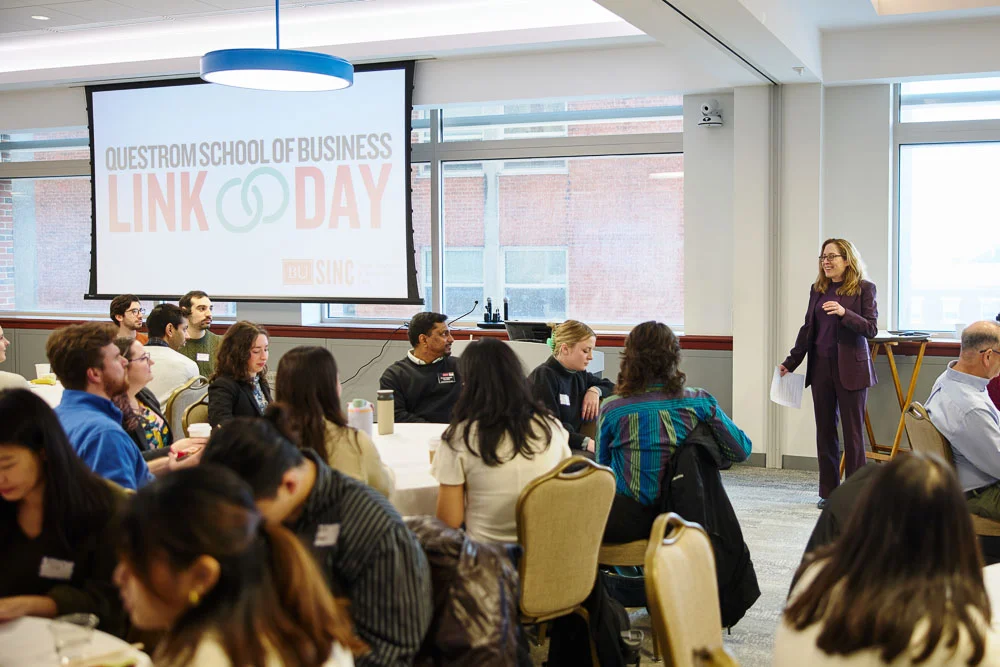
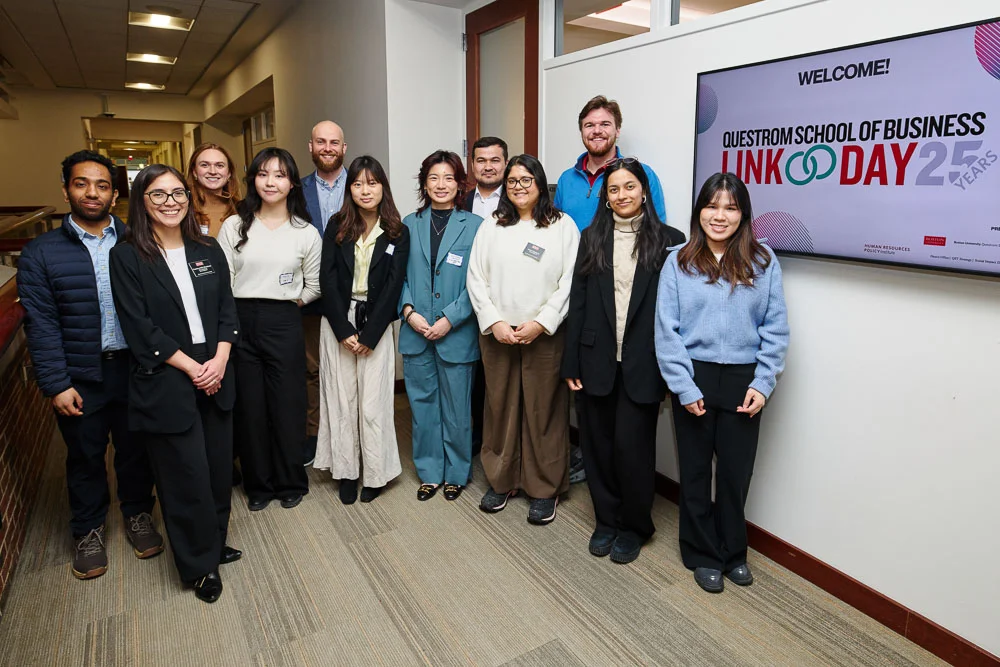
On February 7, 2026, Boston University Questrom School of Business marked the 25th anniversary of Link Day – its signature, one-day pro-bono consulting event that brings Questrom graduate students together with mission-driven organizations across Greater Boston. Link Day is closely tied to Questrom’s Social Impact MBA program, which is celebrating its 50th anniversary this year and has long positioned business as a force for good. This year’s event was led by co-leads Kristi Huang and Dan Bilodeau, both second-year Social Impact MBA students, who brought together Questrom graduate students, faculty, and alumni to partner with nonprofits united by a shared goal: creating value for society. While the impact on nonprofit partners is significant, Link Day’s lasting value is perhaps best understood through the student experience.
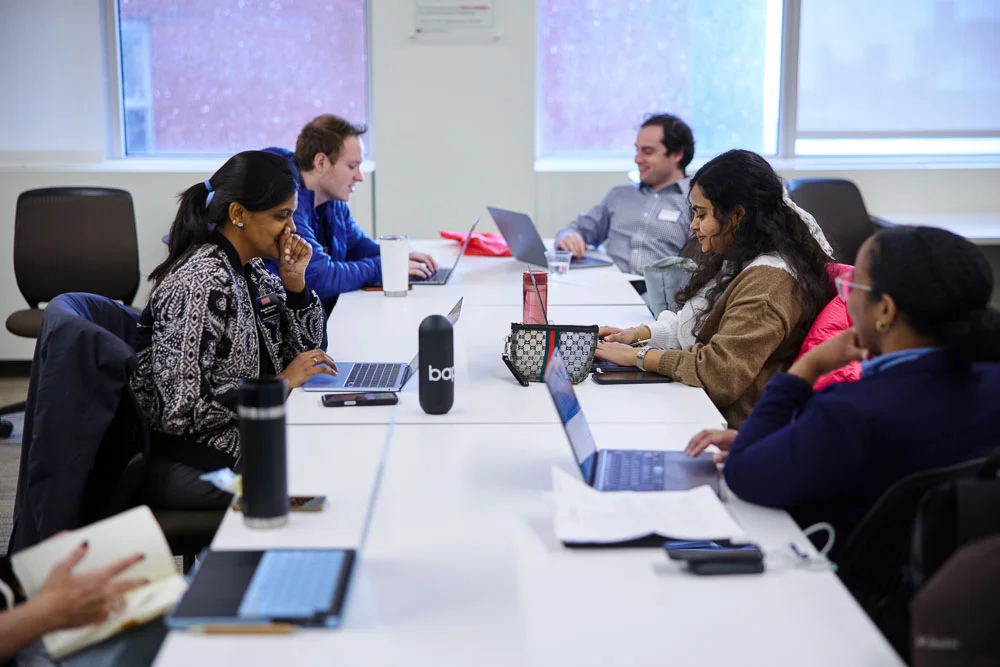
At its core, Link Day is an exercise in applied learning. Students step outside the classroom and into complex, real-world challenges, working under tight timelines to deliver strategic, actionable recommendations. From developing growth strategies and financial frameworks to crafting marketing and outreach plans, the day pushes students to translate theory into practice.
For many students, Link Day offers a deeper understanding of the realities nonprofits face. As student Francisca Ralil Altamirano shared, “Link Day is one of the most meaningful ways to deepen our understanding of how nonprofits navigate operational challenges while staying true to their mission, while also leveraging our skill set to support and create value for their work.”
That perspective came to life through work with partners like the Boston Women’s Fund. Tasked with increasing awareness among young adults, one student team emphasized the importance of clear, consistent communication from the outset, asking thoughtful questions to uncover both immediate challenges and long-term goals. In doing so, they uncovered a striking insight: just 0.3% of grant funding goes to women in Boston. That reality not only shaped their strategy, but deepened their understanding of the organization’s role in advancing equity and supporting underrepresented communities.
The experience also highlights the importance of collaboration. Students work in diverse teams, supported by faculty and in close partnership with nonprofit leaders, to co-create solutions. The process of working alongside peers from different backgrounds, while receiving real-time feedback from the organization, resulted in a thoughtful, actionable engagement plan designed to build stronger, long-term connections with younger audiences.
Beyond technical deliverables, Link Day is a catalyst for skill development. Students consistently point to growth in problem-solving and strategic thinking, particularly within the constraints nonprofits often face. Recommendations must be not only innovative, but realistic and mission aligned. As Francisca Ralil Altamirano noted, “Our goal was not just to propose ideas, but to design an impactful and sustainable strategy that truly advanced their mission.”
That balance of urgency and purpose is what makes the day so powerful. While applying classroom frameworks in a real-world setting was valuable, what stood out most to students was how quickly teams could come together to generate thoughtful, creative solutions. The experience served as a reminder that meaningful change can happen quickly when people are aligned around a shared goal.
That sense of purpose is especially strong for students nearing the end of their Questrom graduate journey. Reflecting on the experience, student Kate Baldukhaeva shared, “As I complete my MBA this spring, I’ve been reflecting on how I can use my final semester to give back to the local community by applying the skills and knowledge I’ve gained over the past two years.”
Working with EquiTable Food Systems, she saw firsthand how classroom frameworks translate into real-world impact. “What resonated most was witnessing how quickly a group of people from different backgrounds could come together to come up with the most creative and thoughtful solutions in such a short period of time,” Baldukhaeva noted, highlighting the power of collaboration under pressure. “It was a great reminder that a positive change can happen at any moment.”
As Link Day celebrates 25 years, it continues to demonstrate that some of the most meaningful learning happens not just in classrooms, but in partnership with communities. For students, the day is more than a consulting exercise; it’s a defining experience that shapes how they think, collaborate, and lead with purpose.