






• About Us
  • Get Insights to Your Inbox
Saturday, September 5, 2026
Generic selectors
Exact matches only
Search in title
Search in content
Post Type Selectors
Search in posts
Search in Author
Search Events
Filter by Categories
Action Learning
Artificial Intelligence in Business
Book Club
Books
BU Today
Business Challenges
Business Education
Business Functions
Business Policy & Markets
Corporate Strategy
Digital Business
Digital Business Institute
Diversity, Equity & Inclusion
Entrepreneurship & Innovation
Events
Expert Take
Feature
Finance & Accounting
Future of Business Education
Future of Work
Global Media
Harvard Business Review
Health, Biopharma, & Health-Tech
Human Resources Policy Institute
Innovation
Insights Live
Institute for Sustainable Energy
Journals
Language of Business
Leadership & Management
Local Media
Marketing
Media Mention
Multimedia
National Media
Newsletter Spotlight
Op-Ed
Operations
Opinion
Our Insights
Partners in Business Ethics
Podcast
Publications
Research Institutes
Risk
ScienceDirect
Silicon Valley Bank
Sloan Management Review
Social Impact
Special Series
Susilo Institute for Ethics in the Global Economy
Technology
The Brink
Thinkers50@BUQuestrom: Passion & Purpose
Videos
Insights@Questrom
  • Our Insights
    • All
    • Business Challenges
    • Business Education
    • Business Functions
    Why Work Friends Are Crucial for Your Health

    The Hidden Value of Back-to-School Shopping 

    Europe Is About to Keep the Cookie Banner. The Evidence Says It Shouldn’t. 

    Europe Is About to Keep the Cookie Banner. The Evidence Says It Shouldn’t. 

    The Acquisition Question Most CFOs Forget to Ask 

    The Acquisition Question Most CFOs Forget to Ask 

    Why are personal bankruptcies soaring over the past two years? 

    Why are personal bankruptcies soaring over the past two years? 

    The World’s Most Dishonest Countries, According to Science 

    The World’s Most Dishonest Countries, According to Science 

    In a ‘work-from-anywhere’ world, where are people working?

    ‘You cannot do real estate without marketing yourself’: This Newton agent is also an influencer 

    America Has a School Attendance Crisis

    National Debt Tops $40 Trillion: Where Trump’s Economic Approval Stands 

    When Is More Information Actually Helpful? Rethinking Disclosure and Consumer Behavior  

    When Is More Information Actually Helpful? Rethinking Disclosure and Consumer Behavior  

  • Videos & Podcast
    • All
    • Podcast
    • Videos
    S1:E1 CVS Paying the “Pink Tax” on Certain Products and the Evolution of the Electric Vehicle Industry

    How Leaders Turn Purpose Into Daily Behaviors

    Beyond Clicks and Sales: How Advertising Shapes Company Value in the Eyes of Investors

    S1:E1 CVS Paying the “Pink Tax” on Certain Products and the Evolution of the Electric Vehicle Industry

    Tariffs and Their Economic Impact

    S1:E1 CVS Paying the “Pink Tax” on Certain Products and the Evolution of the Electric Vehicle Industry

    Navigating Internet Privacy: Unpacking Cookies, Dark Patterns, and Future Data Protection Challenges (2)

    Beyond Prototypes: Rethinking Innovation in Complex Ecosystems with Prof. Douglas Hannah

    Beyond Prototypes: Rethinking Innovation in Complex Ecosystems with Prof. Douglas Hannah

    Is Business Broken? Season 2 out now! 

    Is Business Broken? Season 2 out now! 

    S1:E1 CVS Paying the “Pink Tax” on Certain Products and the Evolution of the Electric Vehicle Industry

    Redefining Retirement: Navigating Emotional and Social Transitions with Insightful Strategies

    Life After Cookies: Who Uses Google’s Privacy Sandbox? – Garrett Johnson

    Life After Cookies: Who Uses Google’s Privacy Sandbox? – Garrett Johnson

    S1:E1 CVS Paying the “Pink Tax” on Certain Products and the Evolution of the Electric Vehicle Industry

    Real Estate Ripples from a Landmark Settlement

  • Insights Events
    • Events
    • Insights Live
    • Questrom Institute Events
  • In the Media
    • All
    • BU Today
    • Global Media
    • Local Media
    • National Media
    • Op-Ed
    • The Brink
    Why Work Friends Are Crucial for Your Health

    The Hidden Value of Back-to-School Shopping 

    Why are personal bankruptcies soaring over the past two years? 

    Why are personal bankruptcies soaring over the past two years? 

    The World’s Most Dishonest Countries, According to Science 

    The World’s Most Dishonest Countries, According to Science 

    In a ‘work-from-anywhere’ world, where are people working?

    ‘You cannot do real estate without marketing yourself’: This Newton agent is also an influencer 

    America Has a School Attendance Crisis

    National Debt Tops $40 Trillion: Where Trump’s Economic Approval Stands 

    Shareholders Are People, Too

    SpaceX Bets That Boosted Endowment Returns Now Dominate Funds 

    Big Tech Voluntary Buyouts Reshape How Silicon Valley Cuts Jobs 

    Big Tech Voluntary Buyouts Reshape How Silicon Valley Cuts Jobs 

    How AI Chat Search Could Disrupt Online Advertising

    Popular online forum Reddit is joining the S&P 500 

    Shareholders Are People, Too

    An Early Bet on SpaceX Led to a 30% Gain for This College Endowment

  • Publications
    • All
    • Books
    • Harvard Business Review
    • Journals
    • Sloan Management Review
    How Retailers Can Capitalize on the “Refund Effect”

    Frontline Workers Know How to Solve Your Organization’s Biggest Problems 

    How Retailers Can Capitalize on the “Refund Effect”

    Research: When Consumers Have More Control Over Ads, They Respond Better 

    How Retailers Can Capitalize on the “Refund Effect”

    Gen AI Could Fix Performance Reviews—or Make Them Even Worse 

    How Retailers Can Capitalize on the “Refund Effect”

    What Global Companies Lose When Decision-Making Revolves Around Headquarters 

    How Retailers Can Capitalize on the “Refund Effect”

    Research: Why You Shouldn’t Treat AI Agents Like Employees 

    How Retailers Can Capitalize on the “Refund Effect”

    Employees Are Relying on AI for Personal Support. That’s Risky. 

    How Retailers Can Capitalize on the “Refund Effect”

    Why Gen AI Feels So Threatening to Workers 

    How Retailers Can Capitalize on the “Refund Effect”

    Is Your Enterprise Data Strategy Ready for the Age of Intelligence? 

    How Retailers Can Capitalize on the “Refund Effect”

    Could the GPT Store Turn ChatGPT into a Platform Powerhouse? 

  • Questrom Book Club
Insights@Questrom
  • Our Insights
    • All
    • Business Challenges
    • Business Education
    • Business Functions
    Why Work Friends Are Crucial for Your Health

    The Hidden Value of Back-to-School Shopping 

    Europe Is About to Keep the Cookie Banner. The Evidence Says It Shouldn’t. 

    Europe Is About to Keep the Cookie Banner. The Evidence Says It Shouldn’t. 

    The Acquisition Question Most CFOs Forget to Ask 

    The Acquisition Question Most CFOs Forget to Ask 

    Why are personal bankruptcies soaring over the past two years? 

    Why are personal bankruptcies soaring over the past two years? 

    The World’s Most Dishonest Countries, According to Science 

    The World’s Most Dishonest Countries, According to Science 

    In a ‘work-from-anywhere’ world, where are people working?

    ‘You cannot do real estate without marketing yourself’: This Newton agent is also an influencer 

    America Has a School Attendance Crisis

    National Debt Tops $40 Trillion: Where Trump’s Economic Approval Stands 

    When Is More Information Actually Helpful? Rethinking Disclosure and Consumer Behavior  

    When Is More Information Actually Helpful? Rethinking Disclosure and Consumer Behavior  

  • Videos & Podcast
    • All
    • Podcast
    • Videos
    S1:E1 CVS Paying the “Pink Tax” on Certain Products and the Evolution of the Electric Vehicle Industry

    How Leaders Turn Purpose Into Daily Behaviors

    Beyond Clicks and Sales: How Advertising Shapes Company Value in the Eyes of Investors

    S1:E1 CVS Paying the “Pink Tax” on Certain Products and the Evolution of the Electric Vehicle Industry

    Tariffs and Their Economic Impact

    S1:E1 CVS Paying the “Pink Tax” on Certain Products and the Evolution of the Electric Vehicle Industry

    Navigating Internet Privacy: Unpacking Cookies, Dark Patterns, and Future Data Protection Challenges (2)

    Beyond Prototypes: Rethinking Innovation in Complex Ecosystems with Prof. Douglas Hannah

    Beyond Prototypes: Rethinking Innovation in Complex Ecosystems with Prof. Douglas Hannah

    Is Business Broken? Season 2 out now! 

    Is Business Broken? Season 2 out now! 

    S1:E1 CVS Paying the “Pink Tax” on Certain Products and the Evolution of the Electric Vehicle Industry

    Redefining Retirement: Navigating Emotional and Social Transitions with Insightful Strategies

    Life After Cookies: Who Uses Google’s Privacy Sandbox? – Garrett Johnson

    Life After Cookies: Who Uses Google’s Privacy Sandbox? – Garrett Johnson

    S1:E1 CVS Paying the “Pink Tax” on Certain Products and the Evolution of the Electric Vehicle Industry

    Real Estate Ripples from a Landmark Settlement

  • Insights Events
    • Events
    • Insights Live
    • Questrom Institute Events
  • In the Media
    • All
    • BU Today
    • Global Media
    • Local Media
    • National Media
    • Op-Ed
    • The Brink
    Why Work Friends Are Crucial for Your Health

    The Hidden Value of Back-to-School Shopping 

    Why are personal bankruptcies soaring over the past two years? 

    Why are personal bankruptcies soaring over the past two years? 

    The World’s Most Dishonest Countries, According to Science 

    The World’s Most Dishonest Countries, According to Science 

    In a ‘work-from-anywhere’ world, where are people working?

    ‘You cannot do real estate without marketing yourself’: This Newton agent is also an influencer 

    America Has a School Attendance Crisis

    National Debt Tops $40 Trillion: Where Trump’s Economic Approval Stands 

    Shareholders Are People, Too

    SpaceX Bets That Boosted Endowment Returns Now Dominate Funds 

    Big Tech Voluntary Buyouts Reshape How Silicon Valley Cuts Jobs 

    Big Tech Voluntary Buyouts Reshape How Silicon Valley Cuts Jobs 

    How AI Chat Search Could Disrupt Online Advertising

    Popular online forum Reddit is joining the S&P 500 

    Shareholders Are People, Too

    An Early Bet on SpaceX Led to a 30% Gain for This College Endowment

  • Publications
    • All
    • Books
    • Harvard Business Review
    • Journals
    • Sloan Management Review
    How Retailers Can Capitalize on the “Refund Effect”

    Frontline Workers Know How to Solve Your Organization’s Biggest Problems 

    How Retailers Can Capitalize on the “Refund Effect”

    Research: When Consumers Have More Control Over Ads, They Respond Better 

    How Retailers Can Capitalize on the “Refund Effect”

    Gen AI Could Fix Performance Reviews—or Make Them Even Worse 

    How Retailers Can Capitalize on the “Refund Effect”

    What Global Companies Lose When Decision-Making Revolves Around Headquarters 

    How Retailers Can Capitalize on the “Refund Effect”

    Research: Why You Shouldn’t Treat AI Agents Like Employees 

    How Retailers Can Capitalize on the “Refund Effect”

    Employees Are Relying on AI for Personal Support. That’s Risky. 

    How Retailers Can Capitalize on the “Refund Effect”

    Why Gen AI Feels So Threatening to Workers 

    How Retailers Can Capitalize on the “Refund Effect”

    Is Your Enterprise Data Strategy Ready for the Age of Intelligence? 

    How Retailers Can Capitalize on the “Refund Effect”

    Could the GPT Store Turn ChatGPT into a Platform Powerhouse? 

  • Questrom Book Club
Insights@Questrom
Home Our Insights Business Challenges Business Policy & Markets

Europe Is About to Keep the Cookie Banner. The Evidence Says It Shouldn’t. 

Tesary LinfeaturingTesary Lin
August 27, 2026
in Business Policy & Markets, Digital Business, Feature, Our Insights
23
0
Europe Is About to Keep the Cookie Banner. The Evidence Says It Shouldn’t. 
Share on FacebookShare on TwitterShare on LinkedIn

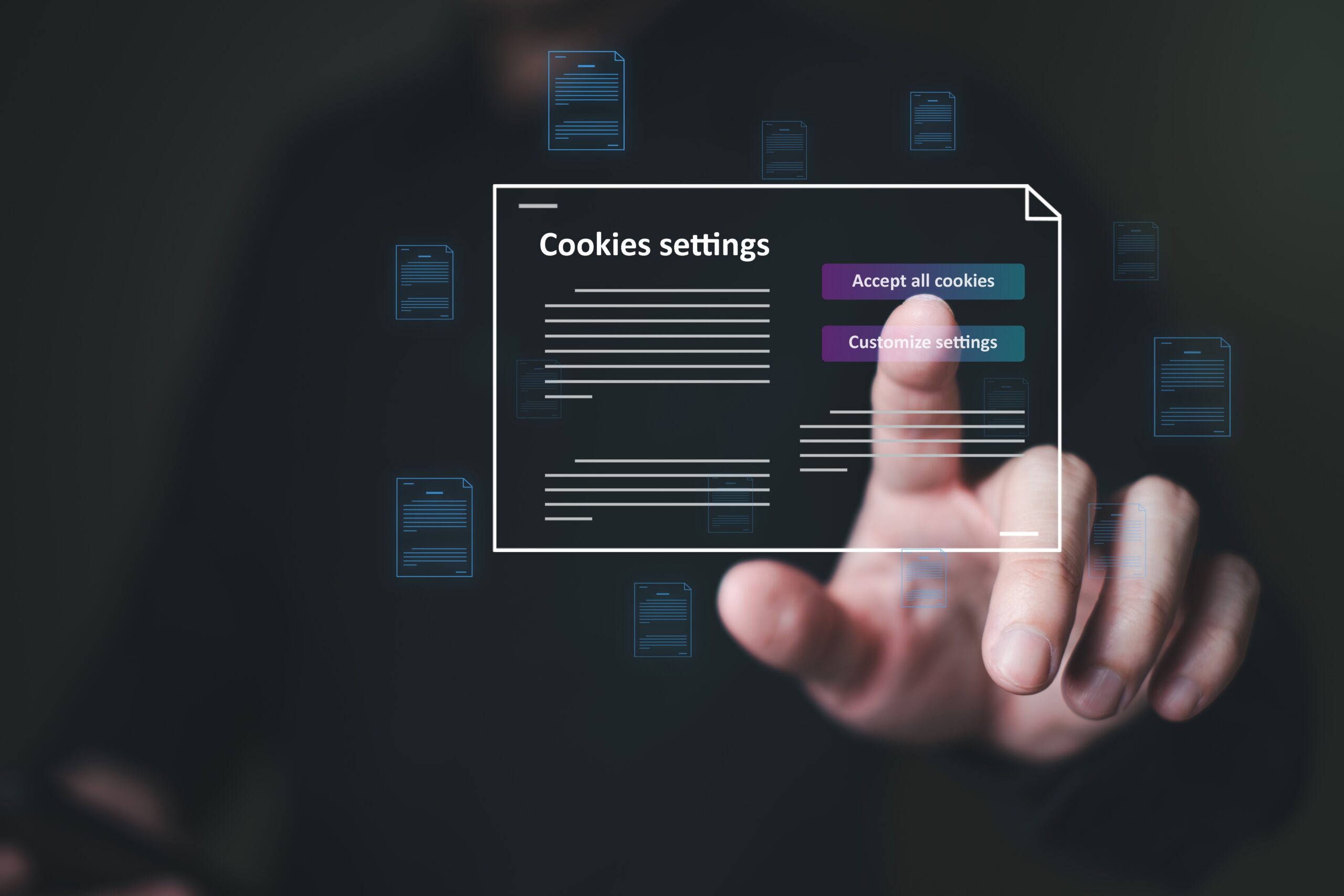
Every time a website asks visitors to accept or reject cookies, it’s making a bet about how people respond to friction and design. In the latest Insights@Questrom blog post, Tesary Lin, Assistant Professor of Marketing at Boston University Questrom School of Business, examines why the real question isn’t how the cookie banner is designed – it’s whether banners should exist at all. 

A field experiment on consent design, and what it means for regulators and for companies that collect data 

In June, the Council of the European Union removed the provision that would have ended the cookie banner from its digital reform package, known as the Digital Omnibus.1This provision required websites to honor a privacy preference set once at the browser level and applied to all websites a user visits. The advertising industry had lobbied hard for the removal. The European Parliament has not yet taken a position, so the fight is not over.  

California went the other way. Under the existing California Consumer Privacy Act, businesses serving California consumers must already honor a browser-level opt-out signal.2 The new California Opt Me Out Act requires that from January 2027 onward, every browser available to California users must offer a browser-level opt-out mechanism.3

Everyone in this debate has a theory about how consumers behave. Publishers and consent management platforms argue that without a banner on every site, consent disappears and with it their revenue. Privacy advocates say the banners are “privacy theater”, creating the illusion of agency and choice while offering little actual data protection. Regulators are somewhere in between. However, there has been little evidence from studies based on natural browsing data to support either position. 

With my colleagues Chiara Farronato and Andrey Fradkin, I ran a field experiment to find out how consumers interact with cookie consent in a natural browsing environment. The results favor the browser-level choice by a wide margin, and they also say something useful to any company that hopes to keep collecting data. 

The Experiment 

We recruited U.S. adults who use Chrome and asked them to install a customized browser extension. When a participant visited a new website, the extension replaced the site’s cookie banner with one of our six designs, chosen at random. Each design offered the same three options (accept all, reject all, cookie settings) but presented them differently, in what economists call choice architecture: design elements that change the ease and salience of different actions. One design was the “no nudge” benchmark, where we present three options (accept all, reject all, cookie settings) with equal salience. The others either hid “reject all” or “accept all” behind a “settings” menu, reordered the position of different options, or grayed out options other than “accept”. Whatever the participant chose, the extension passed the choice back to the website. Participants browsed as they normally would for a week, visiting about 54 unique domains each. In total, we recorded 23.6k consent decisions across 5.4k unique domains. 

Three features make the results credible: Random banner assignment allows us to cleanly identify how banner design affects cookie consent decisions and compare them against the benchmark. Participants react to banners in real browsing environments: quickly, distracted, while trying to read something else. Finally, a wide website coverage means our results describe the broader internet, rather than a selective few companies. Not All Choice Architectures Are Equal 

Under the benchmark design, consumers choose “accept all” cookies 61 percent of the time and select “reject all” another 14 percent of the time during their own browsing. Hiding an option behind the “settings” menu decreases the probability of choosing this option by 70%: rejection rate decreases by 11 percentage points when hidden, while “accept all” decreases by 44 percentage points. When prompted to make one extra click to reach their preferred choices, consumers mostly decide to close the window directly, rather than attempting to go to the “settings” menu.  

In contrast, pure visual changes did little to change consent decisions. Putting “accept” on top raises acceptance by a mere 3 percentage points. Graying out alternative options alone has a similar negligible effect. The common phrase “choice architecture” (also known as “dark patterns”) blurs a distinction between designs that create choice friction and those that do not, and we find that these two categories differ vastly in their effectiveness in changing consent decisions.  

The Cost of Repeated Consent 

In our experiment, we reduced the frequency of consent banner appearances to at most one every 10 minutes to address the concern that participants would exit the study due to fatigue. Still, people closed the banner without choosing 22 percent of the time during their ordinary browsing. Worse still, these decisions to abandon active choice often operate under a false assumption: 61% of our participants believed closing the window means rejecting cookies, while in the United States, websites usually continue collecting cookies upon consumer inaction, because no law requires a website to do otherwise.  

Then there is time. A benchmark banner without deliberate obstruction took 7 seconds on average, 2.5 at the median. Clicking into settings added 4 more seconds per banner. Seven seconds times 54 sites a week, at the average U.S. wage of $36 an hour, is about $4 per week per person ($1.30 at the median). Multiplying this number by 270 million adults in the U.S. implies a $1.08 billion total weekly loss. 

The Benefit of Simplified Choices Is Large for Every Type of Consumer 

To compare policies, we built a model that turns choices and time into dollars of consumer welfare per person per week. We start with the best possible per-site banner: no hidden buttons, and a default set to what most people prefer. This banner is worth $2.96 per user per week. The typical U.S. banner, with the “reject” option hidden, is worth 20 percent less. The typical EU banner, removing all deliberate nudges but defaulting to reject, is worth 6 percent less. Telling people what the default does adds 15 percent. 

Now replace all of them with a browser-level choice: choose whether to accept cookies once, and let the choice apply to all websites. This is what Global Privacy Control does, and similar to what the California Opt Me Out Act requires. It raises welfare by $3.67 a week over the best banner, more than doubling it. Under conservative assumptions about the value of time, browser-level choice still increases consumer value by 36%. 

The publishers’ objection is that a browser setting loses granularity: you cannot say yes to your favorite newspaper and no to everyone else. In our data, 30% of consumers vary their consent choices across websites in the benchmark condition. Even for these consumers, the browser-level signal comes out ahead, because the benefit of time saving outweighs the loss of choice granularity. In our end-of-experiment survey, most participants said they prefer the browser setting to banners. 

For Policymakers: The “How” of Choice 

Consent regulation now has two different approaches. The first regulates consent banner design. Both the General Data Protection Regulation and the California Consumer Privacy Act have gone after “dark patterns,” interface designs that steer people toward giving up data. The second approach rethinks the necessity of consent banners. Rather than fixing every banner, it asks whether a single browser setting could replace it. 

The two approaches sometimes contradict each other. More choice, in the form of a banner on every website, offers more consumer control at first glance. However, choice has a cost in time and attention, and a choice made ten thousand times has the potential to degrade decision quality when attention is scarce. Which matters more, the quality of choice or the granularity? Our experimental evidence points to the former. 

The idea that complex choices cost consumers is not new. In other domains, such as health insurance and retirement savings, studies found that complex choices lead consumers to choose options that are clearly worse for them.4 However, repeated choices online take a toll of their own: repeated across thousands of websites, even small frictions such as a single click can materially compromise decision quality and decrease user welfare.  

For Managers: Building a Sustainable Data Strategy 

The Council of the EU’s vote does not settle the matter for companies, while California’s requirement is already finalized. In a previous version of the Digital Omnibus, the Commission proposed the browser-level signal but whitelisted digital publishers, who critically rely on cookie-based personalized advertising as a funding source. The likely future is both regimes at once: browser signals in some regions and banners in others. What should a company do? 

First, stop investing in design-based steering. Where browser signals apply, consent engineering matters little. Where they do not apply, obstruction increases consent, but it is the one design feature regulators have both the evidence and the appetite to punish.5 A lever that enforcement agencies are scrutinizing is not a sustainable foundation for a data strategy. 

Second, notice what raised consent without any design trick. In our study, people accepted cookies more often on sites they knew and visited regularly. The most common reason they gave for accepting was that they trusted the site. A recent study finds that after California and Virginia strengthened privacy rights in 2023, users of a receipt-rewards app in those states shared more data, with the largest change among the most reluctant users, potentially due to increases in trust.6 Trust is slow to build and hard to fake, making it an enduring advantage.  

Watch the EU Parliament’s decision this fall. But whatever it decides, the lesson for anyone who builds a consent screen is the same. Remove the need for an extra click. Communicate your value and the options your customers have regarding data flow and retention. And, wherever you can, ask once. 

Tesary Lin is an assistant professor of marketing at Boston University’s Questrom School of Business. The research described here, “Designing Consent: Choice Architecture and Consumer Welfare in Data Sharing,” was presented at several policy outlets including the FTC Microeconomics Conference and the Brussels Expert Workshop: Web Standards for Data Protection in the EU. It is forthcoming in Management Science. 

  1. https://iapp.org/news/a/rewriting-the-rules-of-ai-targeted-eu-ai-act-amendments-in-the-digital-omnibus-on-ai ↩︎
  2. https://govt.westlaw.com/calregs/Document/I9786D7609E0F11F09EBEE9819175B1F8 ↩︎
  3. https://cppa.ca.gov/announcements/2025/20251008_2.html ↩︎
  4. https://economics.yale.edu/research/when-less-more-improving-choices-health-insurance-markets-0, https://academic.oup.com/rfs/article-abstract/23/4/1405/1591053  ↩︎
  5. https://cybernews.com/privacy/reject-all-cookies-button-must-be-present-in-europe
    https://www.dwt.com/blogs/privacy–security-law-blog/2024/09/california-guidance-on-dark-patterns-and-privacy ↩︎
  6. https://www.hbs.edu/ris/Publication%20Files/26-001_1e7c05a4-cf66-4c28-a23d-04eb5097b1a4.pdf  ↩︎

Tags: consumer behaviorConsumer PrivacyCookie BannersCookiesdata privacyDigital Advertisingonline privacyTesary Lin
Tesary Lin

Tesary Lin

Tesary Lin is an assistant professor of marketing at Boston University Questrom School of Business. Her research focuses on how information and data moderate the relationship between firms and consumers. She is particularly interested in consumer privacy preferences, the impact of privacy policies, and analytics tools that adapt to the modern information environment.

Related Insights

Why Work Friends Are Crucial for Your Health
Global Media

The Hidden Value of Back-to-School Shopping 

September 2, 2026
The World’s Most Dishonest Countries, According to Science 
Global Media

The World’s Most Dishonest Countries, According to Science 

August 24, 2026 - Updated On August 27, 2026
When Is More Information Actually Helpful? Rethinking Disclosure and Consumer Behavior  
Business Policy & Markets

When Is More Information Actually Helpful? Rethinking Disclosure and Consumer Behavior  

August 20, 2026
The Hidden Risk of Getting Paid in Stock Options 
Business Functions

Is It OK to Eat the Same Things Every Day? 

July 28, 2026 - Updated On August 5, 2026
The Replication Crisis and ESG’s Throne of Lies 
Digital Business

Should You Accept Internet Cookies? BU Researchers Say the Open Web Could Suffer Without Them 

June 2, 2026 - Updated On June 10, 2026
In a ‘work-from-anywhere’ world, where are people working?
Business Challenges

‘It makes it more real’: How some people are using cash to rein in their spending 

December 14, 2025 - Updated On December 17, 2025

Upcoming Events

No event found!

Get Our Insights Newsletter

Get Insights straight to your inbox by signing up now.

    Popular Insights

    • It’s Google’s world. Regulators are just living in it. 

      Why this year’s World Cup is so pricey 

      17 shares
      Share 7 Tweet 4
    • When Is More Information Actually Helpful? Rethinking Disclosure and Consumer Behavior  

      13 shares
      Share 5 Tweet 3
    • Personal bankruptcy filings are soaring in 2026, signaling growing economic distress

      10 shares
      Share 4 Tweet 3
    • Renewed Inflation Fears Complicate Fed’s Next Rate Decision  

      10 shares
      Share 4 Tweet 3
    • The Acquisition Question Most CFOs Forget to Ask 

      7 shares
      Share 3 Tweet 2

    Boston University Questrom School of Business
    595 Commonwealth Avenue
    Boston, MA 02215

    Follow Us

    Newsletter

    © 2023 Trustees of Boston University

    • About Us
    • Digital Business Institute
    • Human Resource Policy Institute
    • Susilo Institute for Ethics in the Global Economy

    Welcome Back!

    Sign In with Linked In
    OR

    Login to your account below

    Forgotten Password?

    Retrieve your password

    Please enter your username or email address to reset your password.

    Log In

    Add New Playlist

    Generic selectors
    Exact matches only
    Search in title
    Search in content
    Post Type Selectors
    Search in posts
    Search in Author
    Search Events
    Filter by Categories
    Action Learning
    Artificial Intelligence in Business
    Book Club
    Books
    BU Today
    Business Challenges
    Business Education
    Business Functions
    Business Policy & Markets
    Corporate Strategy
    Digital Business
    Digital Business Institute
    Diversity, Equity & Inclusion
    Entrepreneurship & Innovation
    Events
    Expert Take
    Feature
    Finance & Accounting
    Future of Business Education
    Future of Work
    Global Media
    Harvard Business Review
    Health, Biopharma, & Health-Tech
    Human Resources Policy Institute
    Innovation
    Insights Live
    Institute for Sustainable Energy
    Journals
    Language of Business
    Leadership & Management
    Local Media
    Marketing
    Media Mention
    Multimedia
    National Media
    Newsletter Spotlight
    Op-Ed
    Operations
    Opinion
    Our Insights
    Partners in Business Ethics
    Podcast
    Publications
    Research Institutes
    Risk
    ScienceDirect
    Silicon Valley Bank
    Sloan Management Review
    Social Impact
    Special Series
    Susilo Institute for Ethics in the Global Economy
    Technology
    The Brink
    Thinkers50@BUQuestrom: Passion & Purpose
    Videos
    • Business Challenges
      • Business Policy & Markets
      • Digital Business
      • Diversity, Equity & Inclusion
      • Entrepreneurship & Innovation
      • Future of Work
      • Health, Biopharma, & Health-Tech
      • Risk
      • Social Impact
    • Business Functions
      • Corporate Strategy
      • Finance & Accounting
      • Innovation
      • Leadership & Management
      • Marketing
      • Operations
      • Technology
    • Publications
      • Journals
      • Harvard Business Review
      • Sloan Management Review
    • Insights Events
      • All Events
      • Insights Live
      • Questrom Institute Events
    • Videos & Podcast
      • Videos
      • Insights@Questrom Podcast
      • Podcast
    • Voices in the Media
    • Our Experts

    © 2023 Trustees of Boston University

    -
    00:00
    00:00

    Queue

    Update Required Flash plugin
    -
    00:00
    00:00